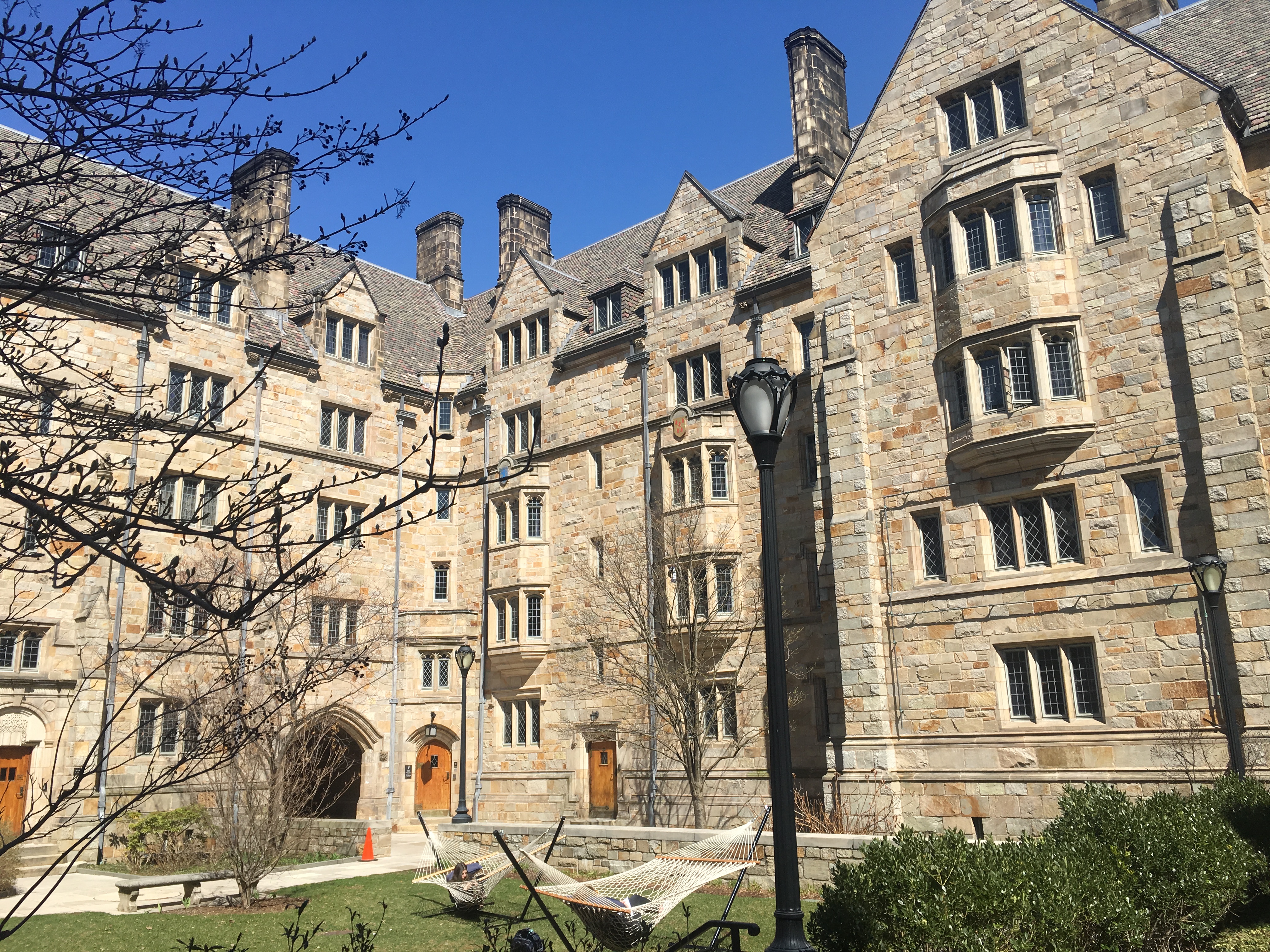
I have spent the last week visiting eight American colleges/universities, from a women’s college in Manhattan, to liberal arts colleges, Ivy League universities and specialist arts colleges. I have been left inspired, excited, embarrassed at how little I knew and the lazy assumptions I made and frustrated that I am not 17 and starting on this journey for myself. University really is wasted on the young. Or the young me at least. Most striking is how distinctive each place is so, more so even than in the UK, it is necessary to really know and ideally visit a college before making any commitments. Seeing eight colleges in five days has nonetheless helped me to draw some general conclusions.
The first is that American universities are accessible to international, including UK, students. I have too readily judged US colleges on the ‘ticket price’ but all the colleges were at pains to stress their needs-blind admissions policy, their commitment to meeting in full if necessary financial need and the high figures for average level of support and number of pupils qualifying. Amherst has a specific programme to support ‘first gen’ students whilst Bard starts its outreach at high school level. A good number operate needs blind admissions for international students too – an incredibly generous approach that for me confirmed an impressive commitment to excellence wherever that might be found and sits in stark contrast to the UK where one fears international students are treated too often as a cash cow and where we have a Prime Minister who seems determined to dissuade international students from coming to study with us at all. To quote a speaker at Yale; there are reasons you might not come to Yale, but we are determined finance will not be one of them.
I quickly noticed too that American universities are not afraid of excellence and elitism. What have become dirty words in some parts of the UK education system are not seen as such out here. There is a simple commitment to being the best, attracting the brightest and encouraging optimum outcomes. This is not social elitism but academic elitism. The colleges I visited were highly selective, and open and proud about it, but absolutely determined to reduce any barriers to finding the best,
The commitment to breadth I will confess I had sometimes seen as suggesting a shallow curriculum. Liberal arts colleges set great store of their expectations that science majors will have an understanding of humanities etc. and this applies to more specialist colleges too. At MIT, for example, one of the leading universities in STEM anywhere in the world, there is a requirement to take humanities too – as one of their professors said, you shouldn’t be looking to improve the world if you don’t understand it. These ‘off specialism’ courses recognise specific interest and skills; arts students talked of ‘the Jazz of Chemistry’ and ‘Neuroscience of Art’, whilst STEM majors’ writing classes looked at space exploration and computer linguistics. The Amherst admissions tutor pointed out proudly that half of those going on to Medical School went from a science major, which was another way of saying half of them didn’t.
There was also a strong activist imperative about, especially at the liberal arts colleges. Bard has school access, prison education and college farm programmes whilst Sara at Bennington has been working on worker re-engagement in rural Vermont. These programmes are directly linked to areas of study and showed an impressive relationship between theory and practice. On a more general level, senior students seemed to be invested with the university teaching and research to an extent that I would not recognise in the UK. Many undergraduates will do paid research for their professors over the summer, others will have teaching and mentoring roles for younger students and everyone I met was engaged beyond the lecture hall.
The opportunities to study abroad for at least part of the course are also strong. Some have strong formal links – such as the 26 Williams’ students able to spend their junior year at Oxford and Bard’s campuses in Berlin, Palestine and Kyrgyzstan – but every college I visit had significant access to programmes all over. Our guide at Williams had spent a month in France studying wine culture and then a summer in Senegal working with women on microfinancing projects whilst a Bennington student was directed to the Netherlands to work on a project using print-making to educate autistic children.
There are of course downsides. It might be hard for some A level students (but not IB) to have to broaden again and I suspect some of the depth of second year A level and Higher IB levels is missing, but these were intelligent, motivated students. I suspect that campus living, especially the meal plans, would feel highly regulated for at least the first two years everywhere, too restrictive for many European students who are looking forward to independent living. And, whilst Amherst explicitly stressed its commitment to open debate and the MIT guide was pretty direct and ‘non-PC’, I sense there is a social censorship that is `I fear coming to UK campuses too but is more ingrained here. For the most part, though, I return ready to recommend the US to many of our Ryde students, as well as better informed as to which destination works for our own diverse and motivated students. And I am grateful to Amherst, Bard, Barnard, Bennington, Emerson, MIT, Williams and Yale for an excellent welcome for me, and the excellent education that I saw them providing, each in their own impressive way. We can be guilty at times in western Europe of academic and intellectual self-congratulation; a week amongst the colleges of New England is a very pleasant way of countering that.
|

 Head Master, Mark Waldron's Blog