Virtually@RYDE – Day 1

Day 1 of Virtually@RYDE and a much quieter place than last Friday when emotions ran high and I was able to raise a glass of bubbly with our Upper Sixth formers before a mass school House Run and TikTok dance.

Now pupils and staff are busy in lessons and lunchtime activities have been advertised including an electric guitar workout, pet club and beginners tango.

Friday was a sobering day for us and our final assembly in the senior school gave me the time to thank all those staff who have worked so tirelessly in all areas of the School over the last couple of weeks to prepare us for this day.

Below is an extract from that Speech, which ended with Kipling’s ‘If’

I have appreciated more than ever over this last week all those at Ryde who make this such a special place ….The creativity, dedication, flexibility and empathy they have shown over these last few days has been extraordinary. We haven’t just made remote teaching work, it has worked spectacularly well – so even now many of you are beaming in… Next week you will all have three days of remote teaching. After that we will have an extended Easter holiday and we will come back, either remotely or reunited in this place, to study as a community across not just our Island but the world. A special welcome to any of our boarders beaming in now from distant parts, and the very best of wishes to those of you about to head off.  There will be challenges for all of us, but it will also be exhilarating. We as teachers will be trying to catch up with a world you are far more familiar with. And it won’t just be lessons; there will be clubs and activities, challenges and morning work outs. We will have some fun.

That doesn’t mean that I am not aware of how unsettling a time this is and I speak particularly to those of you in the Upper Sixth. We cannot yet be certain what the immediate future brings, but I promise to you that I will work hard, as will our magnificent team of Sixth Form tutors led by Mr Windsor, to make sure you can move on confidently when the time comes. We cannot know exactly what next term will bring and it may vary depending on whether you are studying for IB or A level. We will support you as individuals, whether that means facilitating an extra term or year, supporting you to an early exam or advising you on the next step. We will also do all we can to mark your achievements, both individual and collective, over the entire span of your Ryde career, some of which have lasted 16 years. There will be a Leavers’ Dinner and a Year 11 Prom.

I have been very impressed with the level of commitment shown by Year 11 and Upper Sixth this year. Your mock exam results show that you are on course for some of the best results for some time and some of you may be thinking all you have worked for has been in vain. Your teachers might sense that too. But that is not the case. Ryde is not a school that has ever said education is purely, even primarily, about exam results. It is about education, and I feel proud to have worked with my group of 7 politics students this year, and my Global Perspectives class last term, in developing higher order thinking about political ideas that matter. Whether you do the exam or not, you now know and understand a lot more than you did at the start of the year.  You will be no less educated because you haven’t been assessed for six hours on two years’ work.

You and your families know that education, true education, is about character, about skills and habits, values and action. It’s about the person you become because of the people you meet, the decisions you take, the friendships you form. The memories we create together. Everything you have done and achieved here at Ryde has educated you and others and will continue to do so. Ask your parents how many know what subjects their friends studied at school, never mind what grades they got. Your education is so much more than a set of exam results. Remember that.

As the great historian Geoffrey Elton said,’ the future is dark, the present burdensome’. We live in turbulent times that will get more difficult before they get better. A lot of people talk about unprecedented times. Unpredictable is probably a better word. You only have to walk each day into the McIsaac Building and pass the memorial walls for Bembridge, Upper Chine and Ryde to know that previous generations have faced greater challenges still. Some of those most vulnerable in our current crisis are those who made the call to service when our nation was most under threat. And at your age. But these are challenging times and for my generation and yours they are unprecedented. There will come a time when worrying about a GCSE grade in History will look trivial compared to the experience of living through it.

Our Island School with a Global Outlook has enjoyed much of what globalisation has to offer, we are about to discover there is a downside, but it is a downside that cannot compete with the joy, the cultural enrichment and personal development that comes from being a global citizen. The upside will soon return. But, maybe after this we will think more about the fragility of our planet, of the importance of companionship. Dare we hope we can become more aware of those in our community who we sometimes forget – the elderly, the lonely, the vulnerable? Will we learn to appreciate more those things that we might be missing over the next few weeks – sport, drama, music, adventure – and get more out of them in the future.

I want to finish by thanking all of you for the spirit you have shown and I wish you and all your families the very best for the next few weeks. Stay safe. Be sensible. Look after yourself and your families. Remember your parents will be under pressure too, and they will be worried for you and their own parents. Think about those in your neighbourhood whom you can help – with shopping or gardening, or maybe just messaging and giving a wave.

It is exactly one hundred years ago today that Roy McIsaac, Headmaster from 1953 to 1966 and son of our founders William and Constance McIsaac, was born. Next year we will all gather as Ryde School with Upper Chine, celebrating our hundredth year. Make sure, when we do, and we invoke the spirit of Ut Prosim, that we can do so with anecdotes to share and stories to tell of how we were of service in the crazy Coronavirus Crisis of 2020 and make sure we were not lacking in the fight.

God bless you all. Ut Prosim.

Mark Waldron, 23rd March 2020, Day 1 of Virtually@RYDE
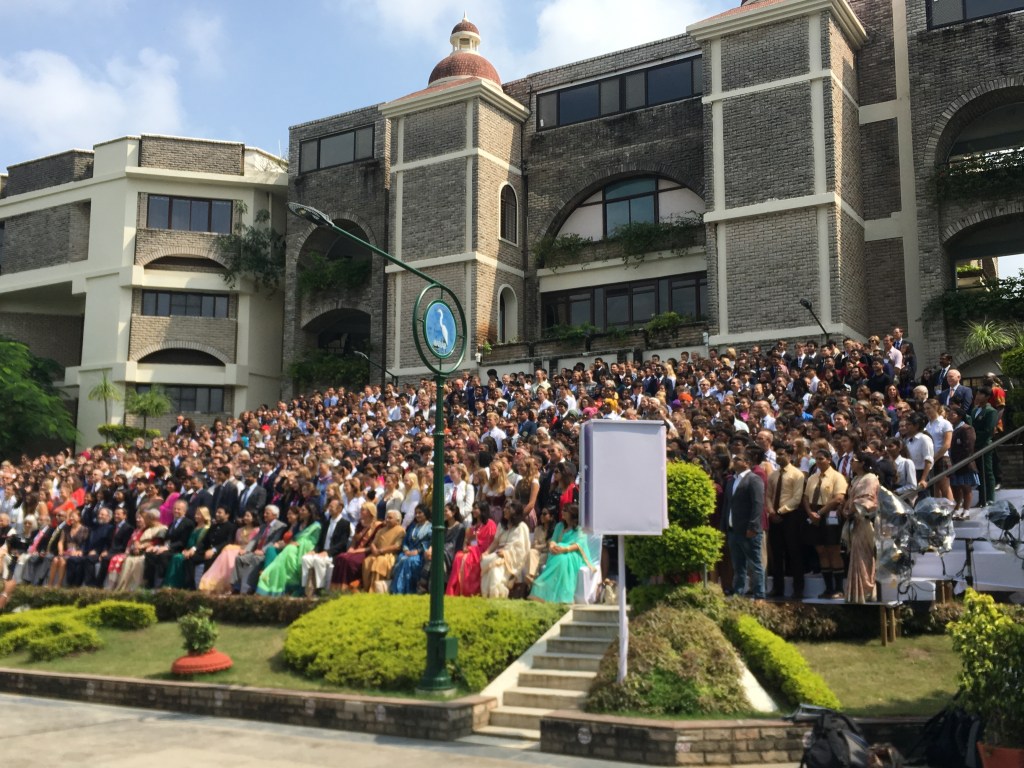
A Ryde School Governor view on the Round Square conference

“Our Round Square weekend took us sight-seeing to two historical spots in the state of Madhya Pradesh (“MP” to locals).  This meant departing from the beautiful Emerald Heights School grounds into the real India to grow our spirit of adventure, a Round Square ideal!  We motored along in a convoy of yellow school buses, through the city of Indore dodging holy cows, feral (but adorable) dogs, and motorbikes piled high with families and produce.    Bollywood music and cartons of mango juice kept spirits high, as we gazed out at the chai wallahs and vegetable sellers lining the way.  Will and Issy (our Head Boy and Head Round Square Prefect) chatted happily to new friends from Australia’s outback.

Mandu is the largest fortified city of Medieval India, surrounded by a wall with 12 major entry gates or “darwazas”.  Built on a plateau of the Vindhya Mountain, it was a hit with both the history and geography students in our group.  A Sanskrit inscription dates its origins back to 555 AD but the fortress is one of the finest examples of Hindu and Afghan fusion architecture.  Issy and I were thinking the same thing:  How would this compare to our very own Carisbrooke Castle?  The stonework felt familiar, the gateways were similar and there were even squirrels scurrying around our feet (stripy ones at that, having been blessed by Lord Shiva).

But whereas English castles needed heating solutions, India’s forts needed water and cooling solutions. Mandu’s water system is an engineering masterclass.   Being located in the middle of an arid region, water harvesting during the monsoon was critical for survival.   Large roof top canals feed underground storage tanks, bathing pools in the shape of the lotus and even Turkish hammams. Water is used for air cooling as well, and at points, even acoustic enrichment. Gosh, they were clever engineers and true environmentalists – another Round Square box ticked.

Life was not just about survival for Indian rulers of course but also about pleasure.  And our knowledgeable guides – all Emerald Heights students – told us stories of the harem of 15,000 women who were paid gold coins to keep fit! 

Maheshwar – the ancient city of Shiva – was Sunday’s outing.  Known for its hand-looming industry and sarees, it is based on the side of the sacred river Narmada and graced by the unpretentious palace of Devi Ahilya – she was such a kind soul, she took the status of goddess as opposed to princess, despite her marriage to royalty.  We were warmly welcomed by the weavers’ children, planting bright orange “bindis” between our eyebrows and passing thread necklaces over our heads.  Our Head Master was impressed by the neatness of the uniform and hair of the children!  Socks and shoes came off to explore Devi’s humble wooden home, before moving onto the Ahilyabai fort on the riverbanks, where I snapped away at the ornate gods and goddesses carved into the sandstone fort walls. 

A huge thank you to our hosts for organising these trips that have highlighted just some of the magic of India.” Dawn Haig-Thomas

News from our head Round Square prefect Issy, in India

Our blog from the round square continues with an update from Issy, our head Round Square prefect;

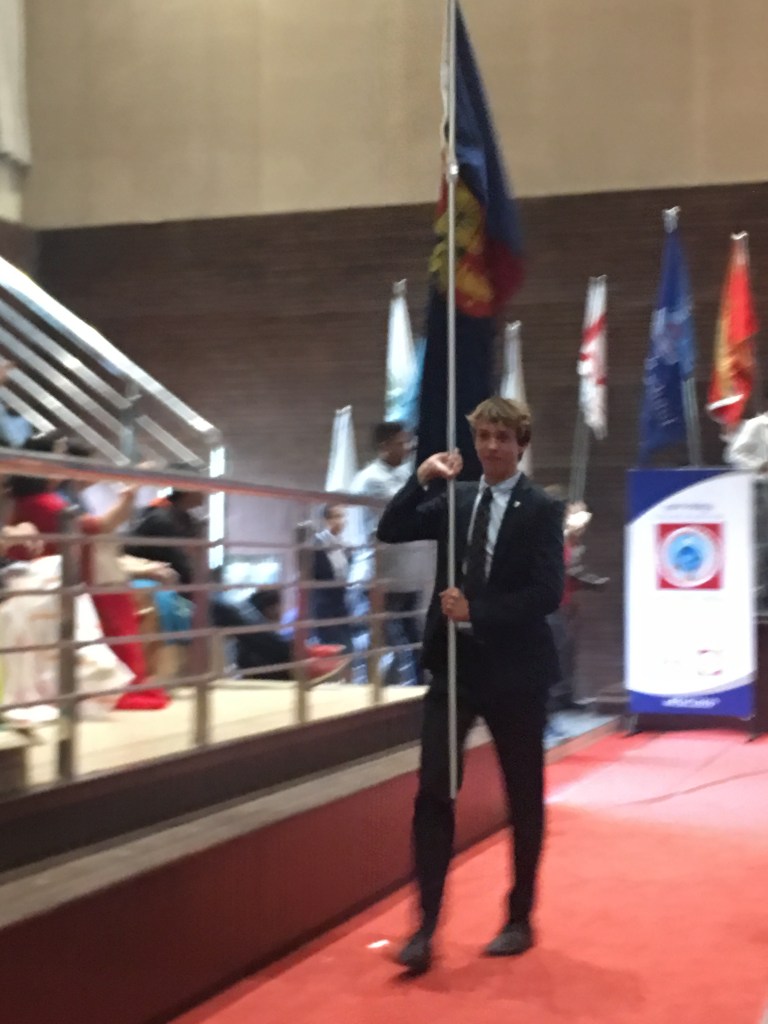
“The conference opened with an impressive flag ceremony. It was amazing seeing all the different school uniforms from around the world.

The conference started off with an address from 2014 Nobel Laureate Mr. Kailash Satyarthi. An inspiring story of freeing child labourers definitely set the tone for the rest of the day. Next was our first “Barazza” session. Before the trip we had guessed what this might be but I don‘t think anyone was quite prepared for what it turned out to be. The entire conference was split into small discussion groups, in which we reflected on the previous talks and played ice-breaking games such as balancing a lemon on a spoon held on your mouth. Following a busy morning, lunch was a nice surprise. An array of delicious curries was only a snapshot of what was to come. After lunch we had a second address from Dr. Shashi Tharoor, a member of the Indian parliament. Full of statistics demonstrating how far India has come as a country, his main message was that we should not be taught “what” to know, rather “how” to know. Next was out first “multicultural evening”, where each school is given an opportunity to showcase aspects of their culture. From K pop to Ballet, we saw performances from so many different countries, it was definitely a highlight.

An early start followed by curry for breakfast marked the start of day two. In the morning we had our third address from Sophia, the robot. The speech was definitely intriguing (if a little disjointed), it showed not only how far A.I. had come but also that it has much room for improvement.

Another Barazza session allowed us to discuss what we thought of robotics. Little did we know that during our fourth address from feminist activist/musician, Madame Gandhi (unfortunately not related to Mahatma Gandhi), it had started raining. The walkways were now rivers, the playing fields had turned to mud. Nonetheless, many enjoyed a game of football, although most of the game was spent on the floor, covered in mud!”

Ryde’s first Round Square Journey

We are the world…

I write this from the heart of the Indian sub continent in the city of Indore where for the last three days Head Boy Will Loach, Head Round Square Prefect Issy Terry and School Governor Dawn Haig Thomas have, alongside me, embarked on the second stage of our Round Square journey. That journey began, not at Heathrow or even Ryde’s Hoverport, but six years ago now when Ryde’s then Deputy Head, Anthony Shaw, first mooted the idea of our joining Round Square and visited Cobham Hall in Kent – strongly encouraged by Allan Graham, a keen advocate of the organisation and former Head of Round Square School in Windermere. We have spent the last year reflecting on how well we live up to the IDEALS that all Round Square schools sign up to – Internationalism, Democracy, Environmentalism, Adventure, Leadership and Service – measuring, auditing and improving what we do in these areas so critical to the character education of our pupils and the well-being of our world. There was more to celebrate than create – a school founded on service and with adventure and leadership running through our DNA made quick connections, but our audit has stimulated the growth of the ‘Green People’ and forced us to look at the effectiveness of pupil voice. The preparation in itself was worthwhile, but the excitement for the four of us to actually be here is palpable. Here in Indore, soaking up warm Indian hospitality whilst sharing our time and ideas with people from all continents. There was something very exciting about that opening ceremony, when flags from all member schools were joined for the first time with one that a week earlier had been flying above Westmont; exciting too to see (or rather not see) Will and Issy as they independently spoke freely with fellow delegates. I reflected that my second day began with a conversation with someone from Jordan, then a coffee with a South African now living in New Zealand, before sharing a discussion with a delegate from Germany and one from Kenya in a seminar run by teachers from Canada and California. Lunch was, admittedly, with colleagues from Blackpool, but after lunch Denmark sat on one side and Romania the other. It was only later a French school leader introduced himself because every year his Year 7 students come to Shanklin for a theatre project and might we like to link up next time? I mention all this because I think it almost certainly is the greatest benefit of being in Round Square – the opportunity to engage easily with peers the world over. That’s why I hope over the years Ryde pupils will now find themselves in exchanges, service projects and conferences such as this. I was, to be honest, less impressed with the plenary discussions. The speakers (including one AI Robot) were prestigious and contraversial, great on both counts, but I felt the audience response to be uncritical and I wanted to hear the dissenting voice more – or am I being too much the western liberal, yearning for my dialectic amongst those eager to embrace jaw jaw rather than war war. Time will tell, and I hope Dawn, Issy and Will can share their stories over the next few days here, but for sure it is a journey I am so pleased to have started, and so eager to ensure many Rydeians will soon join us on.

A ray of sunshine on a rainy day

The decidedly English weather, which is at least preparing me for my imminent return, was the only discordant note during my visit to Sunshine Montessori School in Kitchener today. I was welcomed by owners Guy and Joanne McLean, the husband and wife team that are the inspiration behind the School, and Nancy Joyce who, amongst other things, oversees their Round Square commitment. I was here because of their involvement with Round Square, keen to see how they engage their pupils in a school that finishes when the children are 13 and so understand better the possibilities Round Square will offer for Ryde’s Junior School. At the same time, it was good to see a happy, purposeful and progressive school in operation, with children largely directing their own learning, lots of reflection, lovely use of space, classrooms that carried on when visitors arrived (and quickly involved them) and some innovative facilities such as highly mobile chairs that doubled as bag storage. Like all the excellent schools I have visited on this trip one is also immediately aware of the clear ethos and values of the School, and how they guide staff, pupils and, I presume, parents.

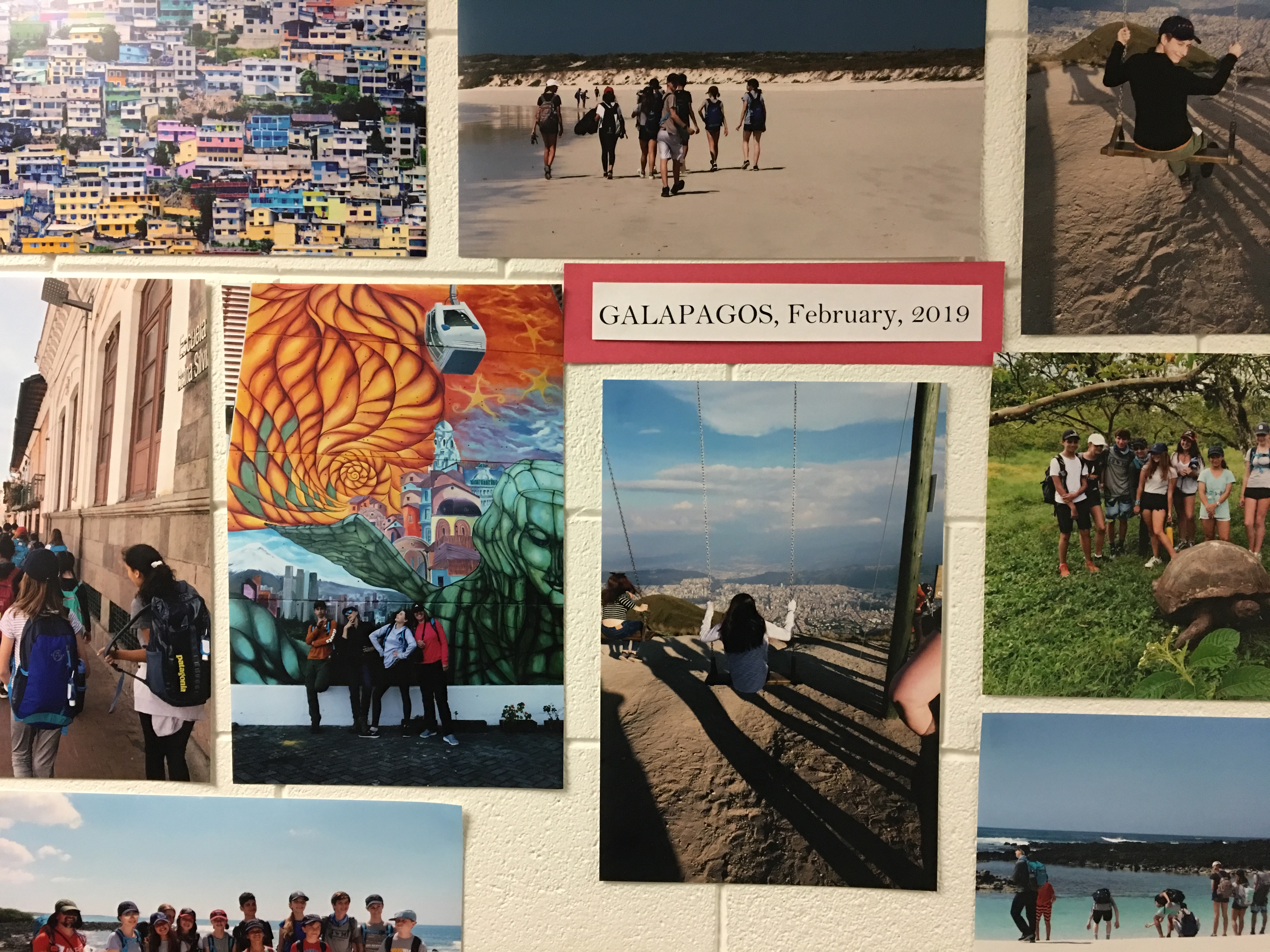
But I was primarily here to learn about Round Square, and the engagement of the younger children. I shouldn’t have been surprised to discover that the IDEALS of Round Square are as relevant to younger students as older ones – indeed, as Joanne said, children at this age have such an inherent sense of justice. What Sunshine Montessori cleverly does is to give sense and direction to that justice, and take what the School has always done but give it greater meaning. A tradition of fundraising has broadened to involve community service and engagement; children are expected to take responsibility for their development and grow the group as well as themselves and the children’s understanding of internationalism and environmentalism is growing through direct and indirect experience of visits and conferences made possible via Round Square. Guy and Joanne see little point in arranging school trips to the UK or the USA; the children will go there at some point with their parents or alone later. Rather, in the last two years alone, pupils, all below the age of 13, have travelled to Colombia, Kenya and the Galapagos Islands. 

The numbers going are small, so they team up with two other schools in Utah and Miami, itself therefore a bonding experience. What impressed me was the conscious impact that these trips had on the whole community. Before leaving, projects were done on where the trip was heading by younger pupils who developed questions for those travelling. They would interact whilst they were away and then present on their visits on their return. The impact of working on community projects in Kenya for those 11 and 12 year olds must have been profound, but by reflection, engagement and reporting those trips were having an impact on the whole community. As a result, a small junior school in suburban Canada was engaging across two further continents. Our Ghana link achieves similar things I know, but I can now see we can engage children directly at a younger age.

The classic dilemma of a school is reconciling the obvious point that we learn best from failure with the need to maximise outcomes in national exams. The solution is to learn those lessons as early as possible, before national exams and curricula interfere. Sunshine Montessori not only understands this, but is doing it too. I admire the courage of the pupils who take these big transformative risks, but also the courage of their teachers and parents that are giving them the freedom to fly. I left Sunshine Montessori this afternoon with a little of their courage in me, and plenty of ideas to ensure that all pupils at Ryde, not just a select few, will benefit from our global programmes.

Back to College

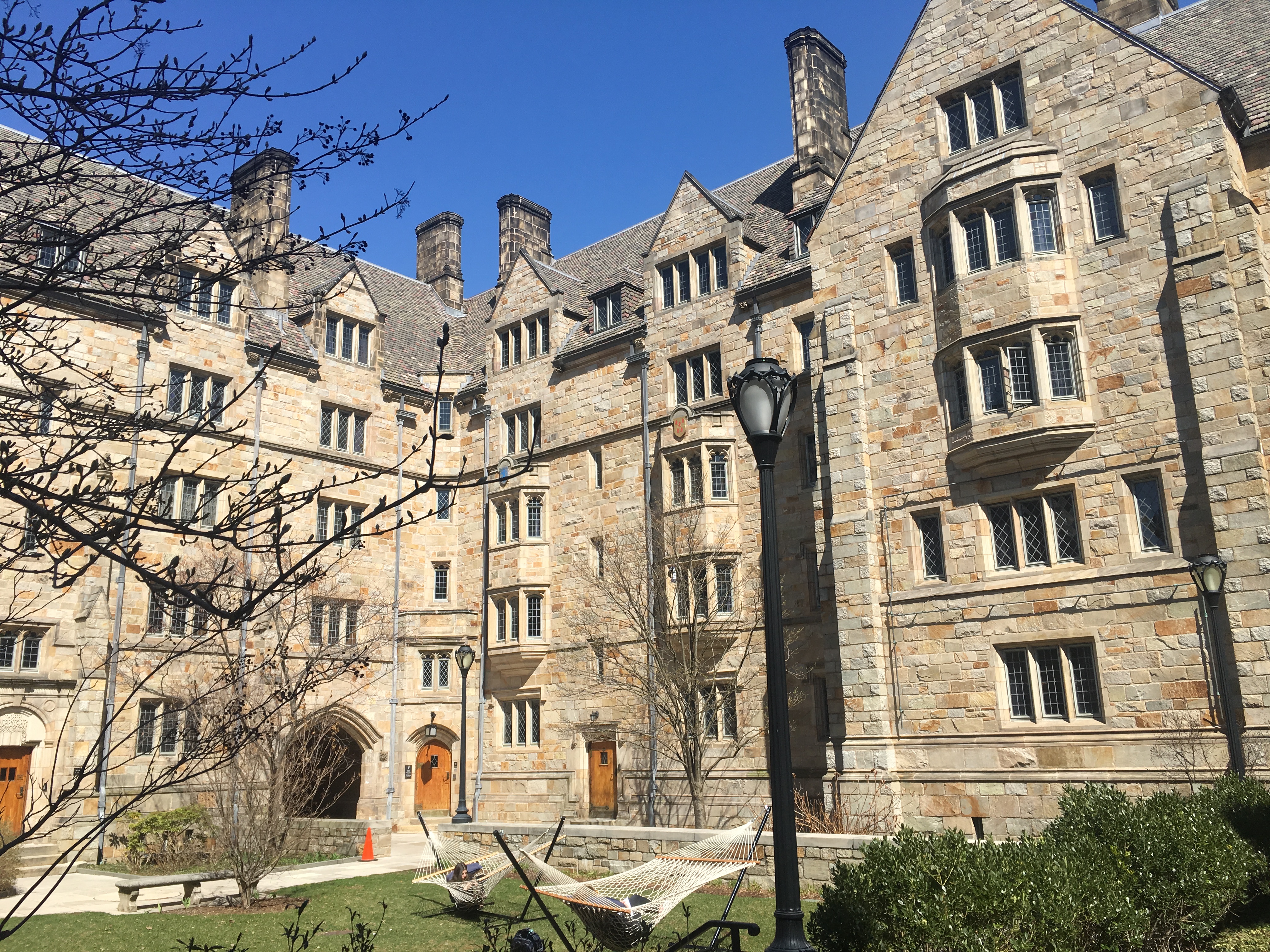
I have spent the last week visiting eight American colleges/universities, from a women’s college in Manhattan, to liberal arts colleges, Ivy League universities and specialist arts colleges. I have been left inspired, excited, embarrassed at how little I knew and the lazy assumptions I made and frustrated that I am not 17 and starting on this journey for myself. University really is wasted on the young. Or the young me at least. Most striking is how distinctive each place is so, more so even than in the UK, it is necessary to really know and ideally visit a college before making any commitments. Seeing eight colleges in five days has nonetheless helped me to draw some general conclusions.
 
The first is that American universities are accessible to international, including UK, students. I have too readily judged US colleges on the ‘ticket price’ but all the colleges were at pains to stress their needs-blind admissions policy, their commitment to meeting in full if necessary financial need and the high figures for average level of support and number of pupils qualifying. Amherst has a specific programme to support ‘first gen’ students whilst Bard starts its outreach at high school level. A good number operate needs blind admissions for international students too – an incredibly generous approach that for me confirmed an impressive commitment to excellence wherever that might be found and sits in stark contrast to the UK where one fears international students are treated too often as a cash cow and where we have a Prime Minister who seems determined to dissuade international students from coming to study with us at all. To quote a speaker at Yale; there are reasons you might not come to Yale, but we are determined finance will not be one of them.
 
I quickly noticed too that American universities are not afraid of excellence and elitism. What have become dirty words in some parts of the UK education system are not seen as such out here. There is a simple commitment to being the best, attracting the brightest and encouraging optimum outcomes. This is not social elitism but academic elitism. The colleges I visited were highly selective, and open and proud about it, but absolutely determined to reduce any barriers to finding the best,
 
The commitment to breadth I will confess I had sometimes seen as suggesting a shallow curriculum. Liberal arts colleges set great store of their expectations that science majors will have an understanding of humanities etc. and this applies to more specialist colleges too. At MIT, for example, one of the leading universities in STEM anywhere in the world, there is a requirement to take humanities too – as one of their professors said, you shouldn’t be looking to improve the world if you don’t understand it. These ‘off specialism’ courses recognise specific interest and skills; arts students talked of ‘the Jazz of Chemistry’ and ‘Neuroscience of Art’, whilst STEM majors’ writing classes looked at space exploration and computer linguistics. The Amherst admissions tutor pointed out proudly that half of those going on to Medical School went from a science major, which was another way of saying half of them didn’t.
There was also a strong activist imperative about, especially at the liberal arts colleges. Bard has school access, prison education and college farm programmes whilst Sara at Bennington has been working on worker re-engagement in rural Vermont. These programmes are directly linked to areas of study and showed an impressive relationship between theory and practice. On a more general level, senior students seemed to be invested with the university teaching and research to an extent that I would not recognise in the UK. Many undergraduates will do paid research for their professors over the summer, others will have teaching and mentoring roles for younger students and everyone I met was engaged beyond the lecture hall.
 
The opportunities to study abroad for at least part of the course are also strong. Some have strong formal links – such as the 26 Williams’ students able to spend their junior year at Oxford and Bard’s campuses in Berlin, Palestine and Kyrgyzstan – but every college I visit had significant access to programmes all over. Our guide at Williams had spent a month in France studying wine culture and then a summer in Senegal working with women on microfinancing projects whilst a Bennington student was directed to the Netherlands to work on a project using print-making to educate autistic children.
 
There are of course downsides. It might be hard for some A level students (but not IB) to have to broaden again and I suspect some of the depth of second year A level and Higher IB levels is missing, but these were intelligent, motivated students. I suspect that campus living, especially the meal plans, would feel highly regulated for at least the first two years everywhere, too restrictive for many European students who are looking forward to independent living. And, whilst Amherst explicitly stressed its commitment to open debate and the MIT guide was pretty direct and ‘non-PC’, I sense there is a social censorship that is `I fear coming to UK campuses too but is more ingrained here. For the most part, though, I return ready to recommend the US to many of our Ryde students, as well as better informed as to which destination works for our own diverse and motivated students. And I am grateful to Amherst, Bard, Barnard, Bennington, Emerson, MIT, Williams and Yale for an excellent welcome for me, and the excellent education that I saw them providing, each in their own impressive way. We can be guilty at times in western Europe of academic and intellectual self-congratulation; a week amongst the colleges of New England is a very pleasant way of countering that.


when power corrupts, poetry cleanses

I should start this blog with the proviso that the views about to be expressed are my own and not in any sense the School’s, but a visit to the Frick Gallery in New York yesterday and the JFK Presidential Library in Boston today brought the question of political leadership right to the fore. Already, from conversations with friends now living here, I had begun to see America as increasingly binary: everything I visited here was of either strikingly elegant quality or overwhelmingly cheap and tacky; if you didn’t support x then you stood with y; if you do not agree with all I say, you are my enemy and a threat. As what happens in the US so often crosses the Atlantic, is this where binary Brexit Britain is headed too?

I love the Frick. The paintings are hung naturally and intimately, meaning you can get right up to works of art and see the craft in their production. They are placed naturally rather than in a clinical gallery. But the prime reason I return is to see Holbein’s portraits of More and Cromwell side by side. The images are immediately recognisable, but to see them together, these two political giants and fierce rivals of Henry VIII’s reign, gazing across at one another, always brings me to a stop. Whether Holbein has captured their character, or whether his portraits have actually shaped posterity’s determination of that character, I don’t know. But both paintings reveal statesmen at the top of their game, inspired by principle; steely and strong. Raw political power. That I was looking upon them on the day the UK had been due to leave the European Union carried additional weight, for here before me was Thomas Cromwell, the foremost Brexiteer of his day, brilliantly and ruthlessly extracting Britain from the Roman Catholic Church. And opposite him was Sir Thomas More, the eloquent, inspired Remainer in Chief, who would die for his conviction; his life and works testament to Britain being at the heart of European humanism. Even their backgrounds, the connected and patrician More and driven, self-made Cromwell, fit our Brexit stereotypes. On a day when the weakness and inadequacy of Britain’s political class was more apparent than ever, here were two men to show today’s politicians how it should be done.

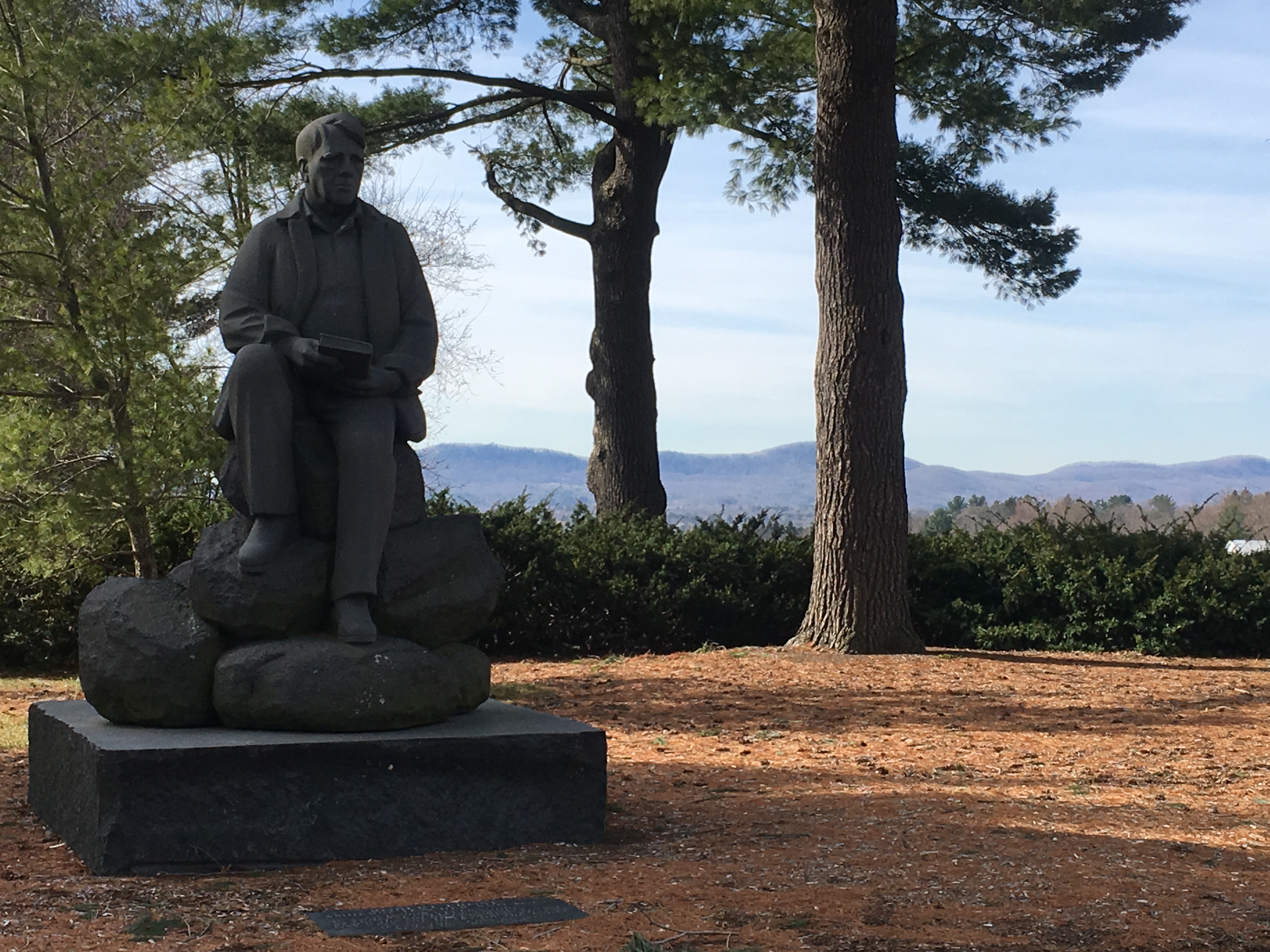
Then today, at John F Kennedy’s Presidential Library, it happened again. Kennedy’s short presidency means tangible policy achievements are slim; his time in office is about the same in fact as Mrs May has thus far achieved. But because the museum told the story of his Presidency in real time, you quickly got the sense of the crises he faced and the way he, and his oratory, rose to the challenge. It was the height of the Cold War; Cuba, Berlin, Vietnam all crowded in, as well as domestic challenges on Civil Rights, industrial corruption and the economy. It was impossible to spend time in this homage to the early 60s and not feel the stark contrast with today. Kennedy’s eloquence was overwhelming. His intelligence came across in the direct and deft way in which he answered questions. His experience of war and travelling in pre-war Europe had given him insights he applied instinctively. His language was hopeful and unifying, but challenging too (‘we choose to go to the moon in this decade and do the other things not because they are easy, but because they are hard.’) That language was not only beautifully crafted, annotations and changes to his prepared speeches showed he could switch eloquently according to the mood and moment. I was especially struck by a speech that was new to me, one given at Amherst in honour of Robert Frost, and which revealed a cultural sensitivity it is impossible to imagine hearing from any politician today. The words to be delivered were strong enough – ‘when power intoxicates, poetry restores sobriety’ – but Kennedy declared instead, ‘when power corrupts, poetry cleanses.’  I was in the presence today of a President who was cultured, thoughtful, intelligent, flexible, inspiring and unifying. 

Of course, Kennedy had failings; like many politicians of the past he probably couldn’t have survived the scrutiny of today. More and Cromwell too. As I left the museum I couldn’t avoid feeling frustrated, even angry, about our politicians who serve us today. And then, in the final room, a challenging final quotation, and one that brought me up short;

‘In a democracy every citizen, regardless of his interest in politics, ‘holds office’; every one of us in a position of responsibility; and in the final analysis the kind of government we get depends on how we fulfil those responsibilities. We, the people, are the boss, and we will get the kind of political leadership, be it good or bad, that we demand and deserve.’

I often speak to Ryde pupils about our responsibilities as citizens. Kennedy reminds us of that stark responsibility, and that if politicians are our servants, then in a democracy we are the culpable masters.

Robert Frost’s statue, Amherst

Lessons from the Incas

Whilst on Easter Island I quickly appreciated the importance of the Humanities. Over the last three weeks, as I have worked my way round Chile, Peru and Bolivia with little Spanish beyond gracias and manana, I have inevitably realised how much easier things would have been had I spoken some, any, Spanish. Whether that makes the case for studying languages per se I am not so sure. Having worked in Prague and Athens I have generally taken the view that schools can’t prepare students for the languages they will necessarily need in their career/life (it would have been an odd Yorkshire school to teach Czech or Modern Greek, although a surprising number of Sheffield schools taught Russian in the 1980s) but by learning one or two languages it makes it easier to grasp and communicate in any of them. That isn’t quite what has happened; indeed, in the panic of the moment I have tended to resort to Italian – the language I know least well and the least likely to be known here. I won’t be shaken of my view that learning languages is important, but I suspect at school its value lies more in the cultures you discover and the mind set you encourage as the practical advantages of knowing useful vocabulary.

Of all subjects, it is engineering that I have come to appreciate most in the last month or so. A typical historian, I had until recently viewed engineering as a rather dull and mechanical subject – important to have engineers, and good ones too, but a rather dull and earnest thing for academic study. If I am brutally honest, those who studied it when I was at university didn’t really do much to dispel that perception either. My opinion has been changing on that over recent years; at Ryde we have had an impressive number of pupils going on to do engineering courses and they have largely been intelligent, committed and creative characters. Visits to Machu Picchu, the Nazca Lines, numerous Inca and pre-Inca sites and the Potosi mines have brought home the extraordinary achievements in engineering that those societies achieved, centuries before our own and not just without computers and calculators but the wheel and pulleys too. But I have also been struck by the blend that engineering requires of scientific/mathematical knowledge and precision on the one hand; creativity, aesthetic awareness and verve on the other. We know if, of course, but sometimes it takes places of great beauty, simplicity and antiquity to appreciate it.

It was also clear, particularly at the Inca sites of Ollantaytambo and Machu Picchu, just what social organisation much have been necessary to construct and sustain these places; step forward the social sciences too. An understanding of politics, psychology, sociology and economics not only helps us to analyse these societies with hindsight, the understanding those subjects engender must have been necessary on the part of the political and priestly classes to organise the construction of these sites in the first place.

And so I come to the surprising conclusion as I prepare to leave Latin America that, whilst Languages, History and Geography have all helped me appreciate this amazing part of the world, it is a new respect for Engineering and a renewed respect for the social sciences that these extraordinary monuments to civilisation have left me with.

A Peruvian Sunset

Losing our marbles?

Is there anything more divisive and contentious than Brexit that I could write about? Just possibly the question of the rightful resting place of art and nationally sensitive objects, with the added attraction that it is of international rather than just national interest. When I lived in Greece it was very much framed through the debate on the Elgin Marbles/Parthenon Sculptures but I noticed a story in the UK press last week about the shrunken heads in the Pitt Rivers Museum in Oxford. For those who don’t know the Pitt Rivers I would suggest heading to Oxford with due speed for it is one of the most exciting and eclectic collection anywhere in the world and the way in which the displays are laid out make it a museum in itself; an idea of what museums were like at the height of Victorian imperialism. It is full of imperial loot, and any movement to return works to their original location would make the museum an empty shell, which is why I would expect the museum to resist returning anything, for fear of the precedent. The era of ‘Rhodes must Fall’ will, however, make this quite a battle I suspect.

My mind turned to this not just because of the article but because of two moments in the last fortnight of my travels. 

The first occurred at Tiwanaku, an important archaeological site in northern Bolivia that I confess I had not heard of until my visit there. The Tiwanaku civilisation presagedthe Incas and the sun worship, social structures and architecture almost certainly influenced Inca culture. The quality of the ceramics in particular was impressive and the civilisation lasted for several hundred years, with pottery helping us to understand the phases of development and the sociology and theology that underpinned their belief systems. It also came to an abrupt end, with various stories but no certainty just as that which hangs over the fate of Easter Island. Until a few years ago one of the main statues there had sat in the middle of the traffic of La Paz, rather as ‘Cleopatra’s Needle’ does in London; there is no doubt it is better placed now as the centrepiece of the museum. To protect it from further decay there is a clear instruction not to take flash photos. Except that the museum attendant there was quite willing, for a ‘fee’, for me to do so. Far worse, he then started a conversation in which I eventually realised he was ascertaining how much I would be willing to pay for one of the ceramic treasures in the museum. Of his criminal intent there was no doubt.

The second occasion was in Potosi and on a visit to a church in this rather haunting town. There we were suddenly encouraged to view the mummified remains of young children and foetuses, laid out below an altar. Despite the rope separating us, no one prevented some of those in the group from crossing over the line and taking photos. Here I was concerned not just by the failure to enforce rules but by the objects being on display at all; just as those shrunken heads had been said to be inappropriate and an affront to the beliefs of the culture from which they were taken, so I felt that there was something sacriligeous or at least distasteful about what was on display here.


I offer these moments not as compelling evidence for the case for keeping objects in the largely western museums where by historical default they largely lie, but perhaps as a cautionary tale that if, as I suspect will happen, it becomes impossible to resist the demand to return at least some objects to their place of origin, then we shouldn’t let cultural sensitivities prevent us from engaging with questions over the security and nature of how they are displayed and managed. There are, of course, other factors to consider too; how far should we consider the potential audience? (I was the only person in Tiwanakufor the full hour I was in the museum) Does the state with contemporary territorial jurisdiction have any more claim to the artefacts of a previous culture than others (to what extent is contemporary Italy the heir to Ancient Rome, for example?) I certainly feel we shouldn’t be ashamed of the quality of our curatorship of many of these objects over many years, critical as they are to the story of world civilisation and critical as that curatorship has been to their preservation.

Craighouse, Chile

I was lucky to be able to visit Craighouse School, situated beyond desirable northern surburbs of Santiago in a stunning setting that (almost) rivals Ryde. One felt very much out of the city, but that’s a price worth paying to get playing fields and outdoor space within the School grounds and it was actually only a thirty-minute car ride from the centre. Although the School has only been in its current location for a few years, Craighouse is a veritable Santiago institution and the Head himself has been here for close to forty years. Here they do all three IB programmes but whilst they are bilingual (English and Spanish) until Year 9, the later years, including the Diploma Programme, is in Spanish. Like many British schools overseas (including the two I worked in, Campion in Athens and ECP in Prague) the vast majority of pupils are local but have parents who recognise the value of English proficiency and an international perspective that being in such schools brings. And it should remind us too that out there, all the time, young people across the world are adding English language and critical thinking skills to their native languages and perspectives. 

It’s a reminder, too, for the British Government of just how significant British schools overseas can be in building a critical soft power and understanding for British values and I was interested to hear how in a country like Chile, a conservative place which has had radical, military, social democratic and conservative governments over the last fifty years, schools like Craighouse endure. The Head was clear; it’s about values, being clear what they are, being true to them and being prepared to say goodbye to those, parents, pupils or staff, who don’t share them. He observed that many of the current governors are former pupils, indeed pupils he has taught, which certainly helps, but having explicit values provides constancy as governments come and go. I imagine it is about quality too, but those who want to have access to that quality have to accept the values that come with it.

The Head has also noticed, and I saw this in Prague, an increasing interest from ex-pat families, of whom there are an increasing number as firms move headquarters from less stable South American states. These families, generally present for three to four years, would traditionally have sent their children to an American or explicitly international school where all the teaching was in English and, to be honest, you could pick the school up and drop it anywhere else in the world and it wouldn’t look much different. A number of parents are beginning to realise that they are missing an opportunity here for their children to be not just linguistically bilingual but culturally bilingual too; by being in a school that is in touch with its locality and wants its pupils to have a cultural and historical understanding of home, as well as that important international perspective. Interestingly I have noticed this when talking with Chinese educationalists too, who are very keen to embrace global opportunities but don’t want their children to lose their Chinese identity. 

I think there is a recognition here that the global 21st Century workplace is not, as the 20thCentury workplace largely was, an Anglo-American construct. That cultural empathy and the ability to embrace and learn from others matters. And those who know this, the business men and women working around the world, the employers, are keen to ensure their own children are educated to succeed in that world.